In a nutshell
Two high-end ANR headsets, at the same starting price ($1,299 USD; around €1,440 at French-speaking retailers, indicative price checked in July 2026). They don't differ on price but on philosophy: the Bose A30 focuses on comfort, lightness and TSO certification; the Lightspeed Delta Zulu adds two technologies that Bose lacks: a built-in carbon monoxide (CO) monitor and custom audio equalization (HearingEQity).
In all honesty: I currently fly with a Bose A20, and my A30 is on order, so I haven't tested it in flight yet, nor have I tested the Delta Zulu. What I say is based on manufacturer specifications, published reviews and my long experience with the Bose range. This comparison does not replace a personal trial: morphology, wearing glasses and comfort on long legs vary from one pilot to another.
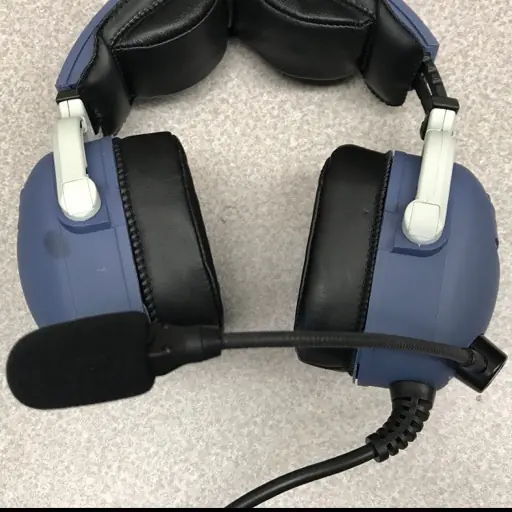
Comparison table
| Criteria | Bose A30 | Lightspeed Delta Zulu |
|---|---|---|
| Weight | ~14.2 oz (~402 g): the lightest | ~14.9 oz (~422 g) |
| Active Noise Reduction (ANR) | Active + passive ANR; clamping force significantly reduced vs A20 (−20% according to Sporty's) | Active broadband ANR + magnesium ear cups |
| ANR modes | 3 levels: Low / Medium / High (High = pistons, Medium = turbines, Low = conversing without removing headset) | Single mode |
| Bluetooth | Yes (5.1; Mute/Mix/Off), depending on ordered part number | Yes (calls, music, app alerts) |
| Battery life / power | 45 h min. on 2 AA batteries (~25 h on Bluetooth) | ~30 h on rechargeable Li-ion battery pack; backup AA battery pack included |
| Microphone | Noise-canceling electret, flexible boom, reversible L/R | Disk microphone, flexible boom |
| Connectors | Twin plug GA · LEMO 6-pin · U-174 heli · Airbus XLR-5 | Twin plug GA · LEMO 6-pin · U-174 heli |
| CO monitor | No | Yes measures cabin CO, audible + visual alerts with adjustable thresholds |
| Hearing equalization | No | HearingEQity 12-frequency test, audio tailored to the ear |
| App | No app required | Config (HearingEQity, CO thresholds) via iOS app; Android limited |
| Certification | FAA / EASA TSO-C139a | Non-TSO |
| Warranty | 5 years | 7 years |
| Price (indicative, Jul 2026) | from $1,299 / ~€1,440 | from $1,299 / ~€1,440 |
Specs: Bose.com, Lightspeed.com, Sporty's, Delta Zulu user guide. Indicative prices, subject to change.
The pilot's perspective
My daily headset is the Bose A20 and that is exactly what makes the A30 interesting to me. Bose claims a clamping force reduced by about 20% compared to the A20: on a long leg, that changes everything, the headset is forgotten. Add the 3 ANR levels (we drop to Low to chat on the ground, go back to High in pistons), a battery life of about 45 h on two AA batteries that can be found everywhere, and TSO-C139a certification: on paper, it's the logical evolution of the A20. Mine is on order, I will update this section as soon as I fly with it.
The Delta Zulu plays another card, and it's a smart one: Lightspeed slipped a carbon monoxide monitor into the headset. For those who fly piston aircraft, where CO can seep in through the cabin heating, it's an extra vigilance, permanently on the ears. HearingEQity, on the other hand, adapts the sound to your hearing. The trade-offs: no TSO certification, slightly higher weight, and dependence on an iPhone to configure these features.
My headset journey
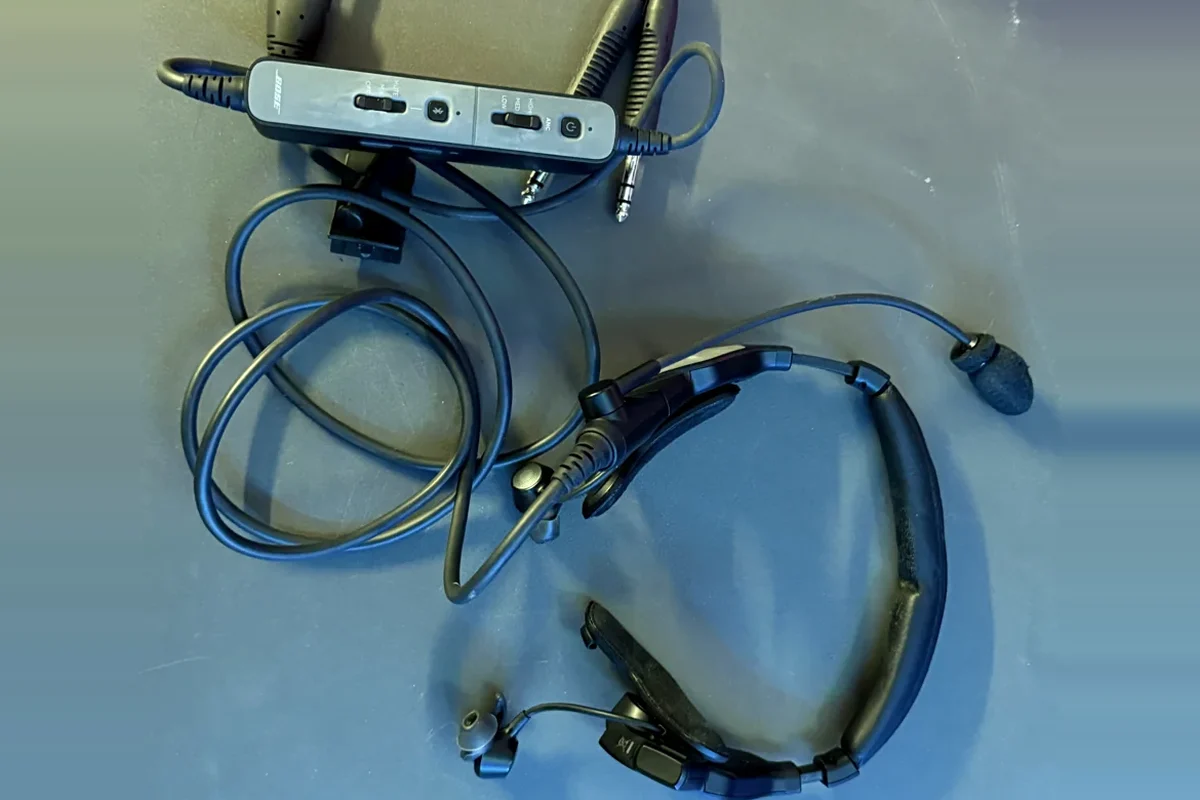
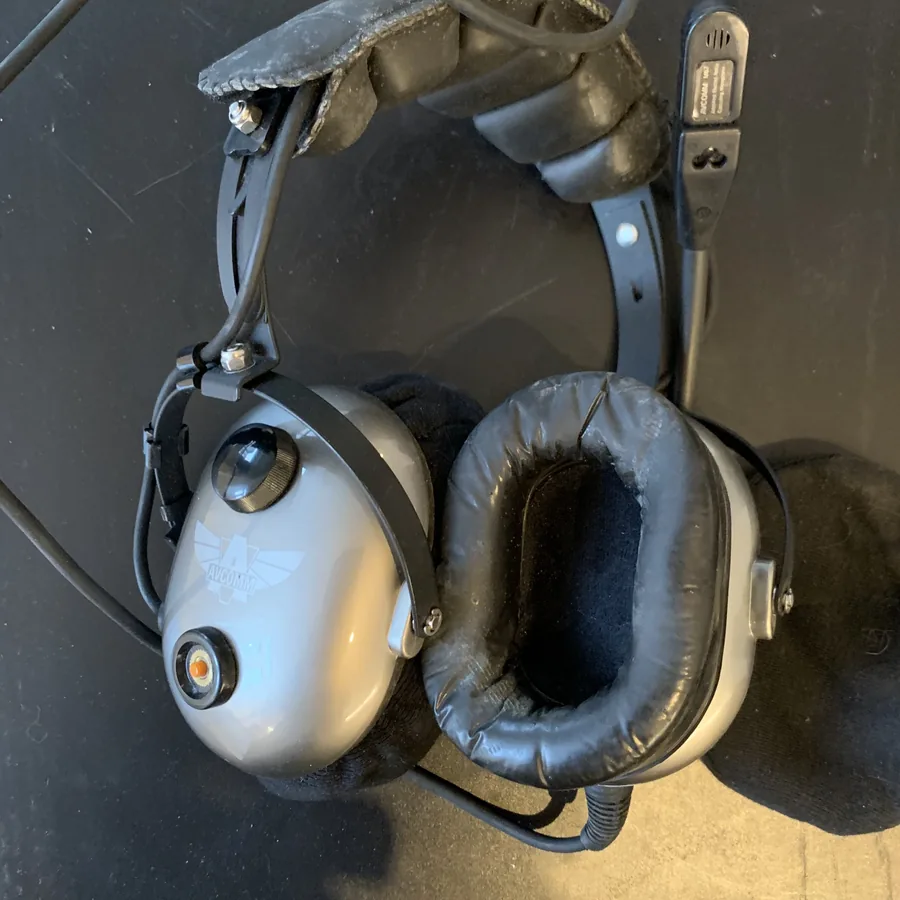
Twenty-five years in the cockpit leaves a collection of headsets. My very first active noise reduction headset was a two-battery AVCOMM; then came the Bose: the Aviation Headset X, then the A20. I also flew for over a year with the Bose ProFlight, the in-ear model designed for pressurized cockpits. And if I gave it up, it's for a reason no product sheet mentions: the headband. The ProFlight's is rigid and very lightly padded; on a ten-hour leg, it ends up reminding you of its presence. The headbands of the Aviation Headset X, the A20 and the A30 are padded with a gel-like foam, and the difference on a long-haul flight is real. Counter-intuitive result: even if the in-ear doesn't clamp the ear, the over-ear headband remains the most comfortable over time. Today I fly with the A20, and soon with the A30: the ProFlight remains in reserve, and it retains one advantage: when you wear glasses, nothing presses the temples against the skin. It is this experience, headset after headset, that feeds this comparison.
The CO monitor, without overselling
It's a vigilance aid, not a certified safety device: Lightspeed itself specifies that the accuracy of the data "is not intended to match that of medical devices or scientific measurement". The sensor has an announced lifespan of about 10 years and is then factory replaced (for a fee). It complements, but does not replace, a certified CO detector and knowledge of the risks of poisoning. → see also our health dossier.
Who is it for?
- Microlight / PPL, piston aircraft: the Delta Zulu's CO monitor makes perfect sense (cabin heating), and HearingEQity is appealing. But the A30 remains unbeatable in terms of comfort/clamping force if you fly for hours on end.
- IFR / traveler: both are suitable; look at Bluetooth and battery life. The A30 on AA batteries never leaves you dry.
- Pro, jet, heli: TSO certification and connectors (LEMO panel-power, U-174 heli, Airbus XLR) lean towards the A30.
- Android pilot: the Delta Zulu's key features are configured on iOS. The A30 requires no app.
So, which one?
There is no wrong choice at this price, just two priorities. Comfort, lightness, 3 ANR modes, TSO certification and independence from any smartphone → Bose A30. CO vigilance, hearing customization and 7-year warranty → Lightspeed Delta Zulu. In pistons, the CO monitor tips the scales towards the Delta Zulu; for those who fly a lot, for a long time, and want a tool without an app, comfort and TSO tip the scales towards the A30.
Where to buy
In French-speaking Europe, favor a specialized retailer (service, warranty, advice) rather than a general marketplace where these headsets are poorly distributed: pilotshop.lu, Bayo, Opale Aéro, Bose.fr.
What you find, and don't find, on Amazon. Neither the Bose A30 nor the Lightspeed Delta Zulu are distributed there at the normal price. On the other hand, you can find the Bose A20, the model that the A30 replaces, and the Lightspeed Zulu 3, the generation preceding the Delta Zulu, without the carbon monoxide detector, which is precisely the Delta's selling point. These two remain excellent headsets, and often trade well below the price of current models: I point them out for this reason, not as equivalents.
Affiliate links, see the disclosure at the bottom of the page.
For the A30 and the Delta Zulu, no Amazon link: they are not sold there. They are, however, available from OpaleAero, with the code LABODUPILOTE.
Where to buy it, and at what price
The A30 and the Delta Zulu are not sold on Amazon. They are sold by OpaleAero, a French aviation retailer.
The code LABODUPILOTE gives 2.5% off their entire catalogue, to be entered in the "Bons de réduction" (discount vouchers) field of the basket.
Prices and shipping are from France. Outside the EU, customs and shipping may exceed the discount.
Commercial link, see the disclosure at the bottom of the page.
Frequently asked questions
Does the Delta Zulu replace a carbon monoxide detector?
Does the A30 work without a smartphone?
Does the Lightspeed app work on Android?
Which one to wear with glasses on a long flight?
Which connectors for an Airbus or a helicopter?
In the same section
Transparency: this page contains commercial links (Amazon, OpaleAero). If you buy through these links, I may earn a commission at no extra cost to you, it does not change anything to my ranking: I compare by actual use, not by commission.